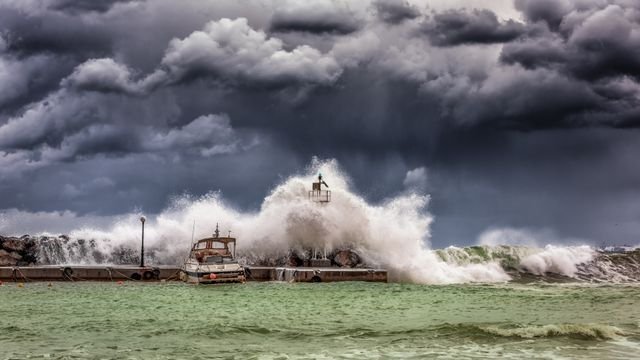
Anyone who lived through María, or listened to family on the island describe the long months that followed, already knows something the forecast never says out loud: the outage can be harder than the storm. Here in Florida the lights may come back in a day or in a week. Either way, a lot of the stress lands in the kitchen. What’s still good in la nevera? Can we cook tonight? Who decides what gets thrown out?
A little planning in June makes those questions much easier in September.
Get Ready While the Skies are Clear
Start with two inexpensive appliance thermometers, one for the fridge and one for the freezer. Check them on an ordinary day so you know what normal looks like. Freeze a few containers of water; they help hold the cold during an outage and become drinking water as they melt. Keep a cooler or two and some gel packs where you can grab them.
Then take an honest look at the freezer. Many of us keep a stash: containers of sofrito, pasteles saved from the holidays, leftover pernil, a big bag of chicken bought on sale. Cook some of it down in the weeks before peak season instead of packing the freezer even fuller. Stock food that needs no refrigeration and little or no cooking, such as canned beans, crackers, peanut butter, plenty of water and a manual can opener.
Find the electrical panel and the main water shutoff in daylight, and make sure more than one adult knows where they are. If titi or a cousin is staying with you for the season, show them too.
And if officials tell your area to evacuate, go. No freezer full of food is worth staying for.
When the Power Goes Out
Keep the doors closed. That’s the whole rule, and it’s the hardest one to follow in a house full of people asking what’s left to eat. Tape a list of what’s inside to the door so nobody has to open it to check.
According to the FDA, an unopened refrigerator keeps food cold for about four hours, and a full freezer holds its temperature for about 48 hours if the door stays shut. If the outage is heading past that four-hour mark, move milk, meat, cooked rice and leftovers into the cooler with ice.
Ready.gov recommends unplugging appliances and electronics so a surge doesn’t damage them when the power comes back. Do it only if the floor is dry and you can reach the plug safely.
Now the part that matters most. Ready.gov says portable generators belong outdoors only, at least 20 feet from windows, doors and attached garages. Not in the garage with the door rolled up, not on the porch under the bedroom window. Carbon monoxide has no color and no smell, which is exactly what makes it so dangerous. Put a battery-powered CO alarm on the shopping list if you don’t have one, and never plug a generator into a wall outlet to power the house.
Deciding What to Keep
When the power returns, read the thermometers before you open anything else. Food that stayed at 40°F or below is generally fine. Frozen food that still has ice crystals can usually go back in the freezer. For everything else, the old saying holds: when in doubt, throw it out. Don’t taste food to decide, and don’t trust your nose. Spoiled food doesn’t always smell bad.
Give one person the final word, so a container that was set aside for the trash doesn’t sneak back onto the table at dinner. And if anyone in the family takes refrigerated medicine, such as insulin, ask the pharmacist now what to do during an outage. Food rules don’t apply to medicine.
After the Storm: Check Before you Plug in
If water got into the house, keep every appliance that sat in it unplugged, even if it looks dry on the outside. Water and mud can leave moisture and corrosion in motors and controls where you can’t see them, and a flooded appliance shouldn’t be switched on until someone has checked it. In South Florida, that might mean calling Starchenko Appliance Repair or another local shop. Tell them up front that the unit was flooded, and don’t turn it on to show them the problem.
If the house stayed dry, plug things back in one at a time. Let the fridge get cold again before you restock it, and trust the thermometer, not the sound of the motor running.
Make it a Family Plan
Put everything in one place: the shutoff locations, the time the power went out, the list of what went into the cooler and the phone numbers you’ll need. The family group chat works well for this. If abuela reads Spanish and the kids read English, write it both ways.
After each storm, talk about what was missing. Maybe it was a second cooler, a better flashlight, or a thermometer you could actually read in the dark. Fix it while the memory is fresh, and the next apagón will be a little easier on everyone.